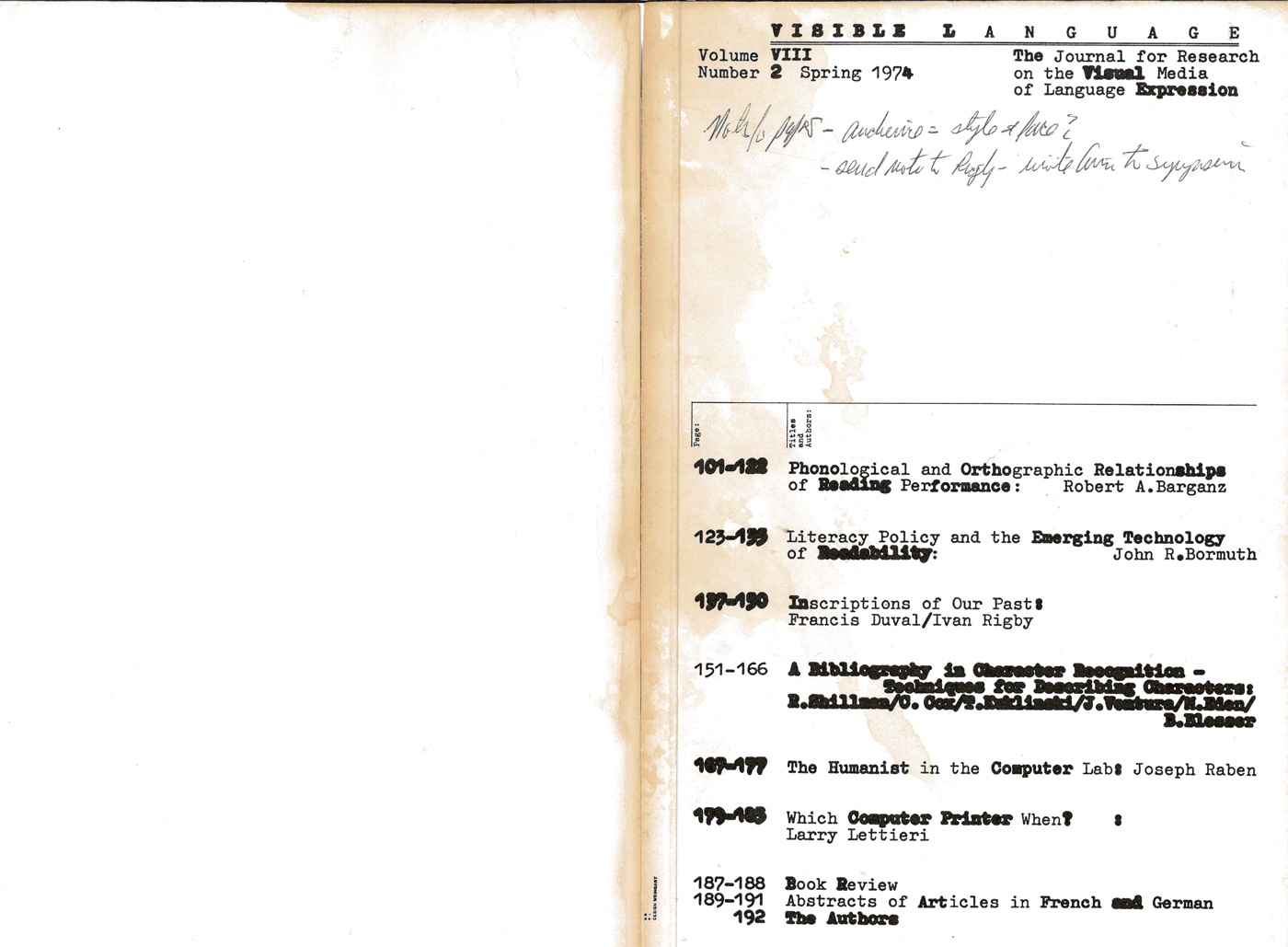
Phonological and Orthographic Relationships of Reading Performance
Authors
Robert A. Barganz
Abstract
This study investigated the use of an intermediate level of orthographic representation based on the theoretical framework of transformational-generative grammar. A general objective was to determine whether a system of semantic correspondence was utilized when irrelevant phonetic aspects of orthography were encountered by good and poor readers from a fifth-grade population. A 2 x 2 x 4 factorial design was employed to investigate the effects of reading ability (good and poor), word reality (real and pseudo), and mode of presentation for stimuli and response items (oral and written). Good readers performed better than poor readers at a statistically significant level (p < .0005) on those tasks which required recognizing regularities on a deep level. When regularities were recognized on a surface level, these differences between good and poor readers diminished. Good readers appeared to display a search technique which abandons a simpler level of correspondence in favor of one more efficient, one which precludes grapheme/phoneme correspondences for one directed toward semantic correspondence.
Because Visible Language is the oldest design journal, we support scholars by making PDFs of all back issues available. The full catalog of back issues is now available!